This is a monthly on-going learning experience programme
“The creation of something new is not accomplished by the intellect but by the play instinct acting from inner necessity. The creative mind plays with the objects it loves.” Carl Jung
This programme aims to meet the following interests of participants:
- On-going personal development and exploration with like-minded people through exploring Analytical Psychology
- Exploring the possibility of applying for the twice weekly psychodynamic psychotherapy training or the Adult Analytic training
- General exploration of concepts in Analytical Psychology through reading, discussion, debate, process and experience
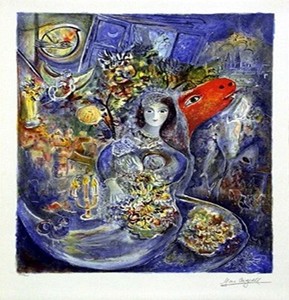
Once Upon a Wound: Exploring Fairy Tales as Psychic and Symbolic maps
‘“In myths and fairytales, as in dreams, the psyche tells its own story, and the interplay of the archetypes is revealed in its natural setting…”
Carl Gustav Jung, The Archetypes and the Collective Unconscious
In this JPEG seminar series, we will explore a series of European and non-European Fairy Tales and their interpretations from a Jungian perspective as well as contextualise them in terms of gender, power and culture. Many tales are about arrested development and its resumption, where the inner world is externalised in story form. We’ll consider how fairy tales emerge from specific cultural worlds and how those worlds shape the kinds of selves imagined within them. We’ll look closely at the assumptions these stories and ancient narratives make about the feminine, the masculine, and the fluid spaces between them—particularly around activity and passivity, agency and receptivity—and how these polarities generate and cast their corresponding shadows, how they resist, unsettle and shape each other.
“The unrealistic nature of these tales … makes it obvious that the fairy tales’ concern is not useful information about the external world, but the inner process taking place in an individual.” (Bettelheim 1976).
Fairy tales are seen as symbolic narrative of psychological development. We will draw on Jungian thinkers (Jung, Von Franz, Hillman and Kalsched etc) as well as relational psychoanalysis (Winnicott, Bowlby, Benjamin, Bromberg and Stern). The stories dramatize themes of attachment, trauma, identity, recognition, separation, moral development and transformation. We will also ask why is female maturation so often represented by waiting, endurance, or being recognised by a male and why is male development coded as action and transformation? We will also explore the tension between identity as process (fluid) rather than destination (fixed) and how culture promotes and constrains this process. Do fairy tales police gender or do they accidentally undo it? We will be drawing on thinkers such as Angela Carter, Marina Warner and Judith Butler and others.
We will draw on specific tales and readings of these tales and illustrate some themes through music, dance and film.
“For those who immerse themselves in what the fairy tale has to communicate, it becomes a deep, quiet pool… behind it we soon discover the inner turmoil of our soul … and ways to gain peace within ourselves.” Bettelheim, B. (1976). The Uses of Enchantment: The Meaning and Importance of Fairy Tales.
What people say
Programme Structure
The JPEG programme will take place on 10 Saturdays over 10 months from 2pm-5pm. Participants will be asked to complete some reading, view some artwork artwork, or watch an excerpt from a film relating to the seminar beforehand. The day will be structured roughly in the following way.
- 2-3.00 Social Dreaming Matrix
- 3-3.30 Break
- 3.30 Dream Reflections
- 4.00 Small Group discussion/exercise
- 4.30 Large Group reflection/exercise
- 5.00 Close
Entry requirement
The course is open to:
- Past participants of the Foundations Course & Therapeutic Skills Course
- Participants of previous JPEG groups
- Current SAP trainees and course participants
- Other individuals who have done an equivalent introductory course.
you can download an application JPEG 2026-2027 here.
Application deadline for 2026-27: 30 September 2026
For further information or clarifications, please contact publicevents@thesap.org.uk call 020 7435 7696 or fill in the contact form below.
We reserve the right to cancel or alter any part of the programme, including course fees, as necessary.
MEET THE COURSE CONVENOR and Facilitator
Barbara MARCH
Barbara March is a Jungian psychotherapist, a member of the Society of Analytical Psychology, and a chartered clinical psychologist. She has been a facilitator of the SAP Foundation Course. Originally trained and worked in Italy. She has been working in the UK in the NHS Secondary Care for 20 years. She also maintains a private practice in Cambridge.
ALI ZARBAFI
Ali Zarbafi D An Psych is an Anglo Iranian Jungian Analyst, Psychotherapist and Clinical Supervisor. He is a member of The Society of Analytical Psychology with 30 years clinical experience in the NHS and in private practice. Ali has an academic background in International Relations and Middle Eastern Studies and has worked extensively with refugees as well as running workshops on the Refugee Experience. He is co-author of Social Dreaming in the 21st Century: The World we are Losing (2009,2024) with John Clare and Mother Tongues and Other Tongues (2021) with Shula Wilson.
